
Strong Families

Building Economic Security and Stability So Babies Can Thrive

Babies thrive when their families are stable, supported and able to meet basic needs. But many families struggle to afford essentials like housing, food and child care, or face other challenges to family stability[MS1.1]. Federal policies play a critical role in supporting families and ensuring babies can grow up in the steady, secure homes they need to thrive.
The Problem

Raising a baby is expensive. Rising costs are forcing families to make impossible choices between rent, food and care. Some families face additional instability due to child welfare involvement or immigration enforcement actions impacting children. These disruptions to stable caregiving  and financial stress have lasting impacts on babies’ development.

The Solution: Federal Investments that Keep Babies on Track 

Paid Family and Medical Leave allows families to bond with a new baby, recover from childbirth, and take care of medical and other caregiving needs without losing income, supporting healthy families and development.

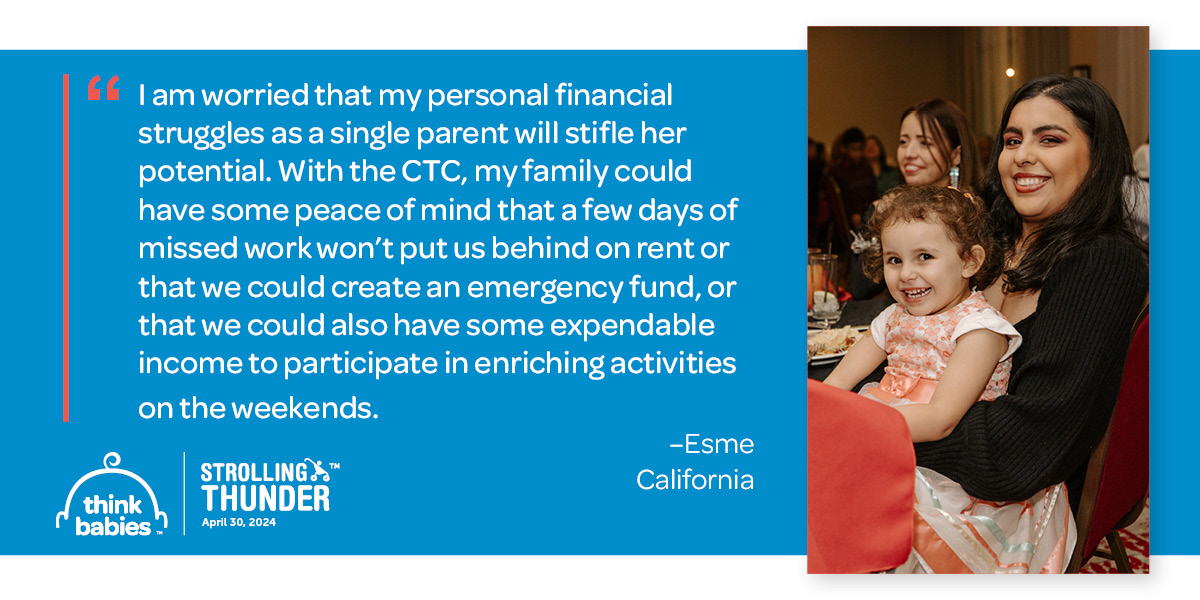
The Child Tax Credit (CTC) and other financial supports provide resources that help families afford essentials, including diapers, cribs, and car seats

The Supplemental Nutrition Assistance Program (SNAP) helps families afford nutritious food, reducing hunger and supporting healthy growth in early childhood.

Temporary Assistance for Needy Families (TANF) supports families with income assistance and funds essential community-based programs, including employment supports

The Social Services Block Grant (SSBG) funds critical social services like child care and protective services, allowing communities to respond to the needs of young children.

Housing assistance, including Housing Choice Vouchers, enables families to access the safe, stable housing babies need for a strong start.

Immigration policies that protect children and keep families together ensure babies receive consistent, nurturing care, supporting their positive emotional, physical, and cognitive development.

Babies need Congress to

  • Support paid family and medical leave, the Child Tax Credit and other financial supports that make raising a baby more affordable for all families, particularly those facing the greatest barriers.
  • Protect and invest in SNAP, TANF, SSBG, housing assistance like Housing Choice vouchers and other programs that meet the basic needs of babies and families.
  • Cease immigration enforcement operations in areas with young children present and avoid family separations or detentions that are harmful for young children’s development.

When families struggle to afford basic needs, babies suffer.

Take Action

Urge your policymakers to invest in the programs that support stable, financially secure families.

Nearly 2 in 5 babies live in families without enough income to make ends meet.

Approximately 1 in 3 families with young children reported noticing impacts of immigration enforcement activities in their community, including young children showing increased signs of fear & anxiety

Despite the necessity of child care, early childhood educators earn less than 97% of all other professions.

4.5 million children younger than 5 rely on SNAP for sufficient nutrition, significantly reducing the risk of food insecurity during a time of rapid physical and mental development.

Advocacy Tools & Resources

Hunger, Poverty, Health, and Federal Nutrition Programs: Use these state fact sheets, from Think Babies and the Food Research Action Center, for national and state-specific rates of hunger and poverty experienced by infants and toddlers as well as the data on the impact of federal programs in the state.

State of Babies Yearbook: 2023: Use national and state-by-state data on the well-being of infants and toddlers to call on federal, state, and local policymakers to improve outcomes for babies and families.